Book Your Appointment
It’s not so hard to keep abreast with what’s happening in the world of SELF-CARE. All you need to do is drop email and we will keep dropping the knowledge bomb!
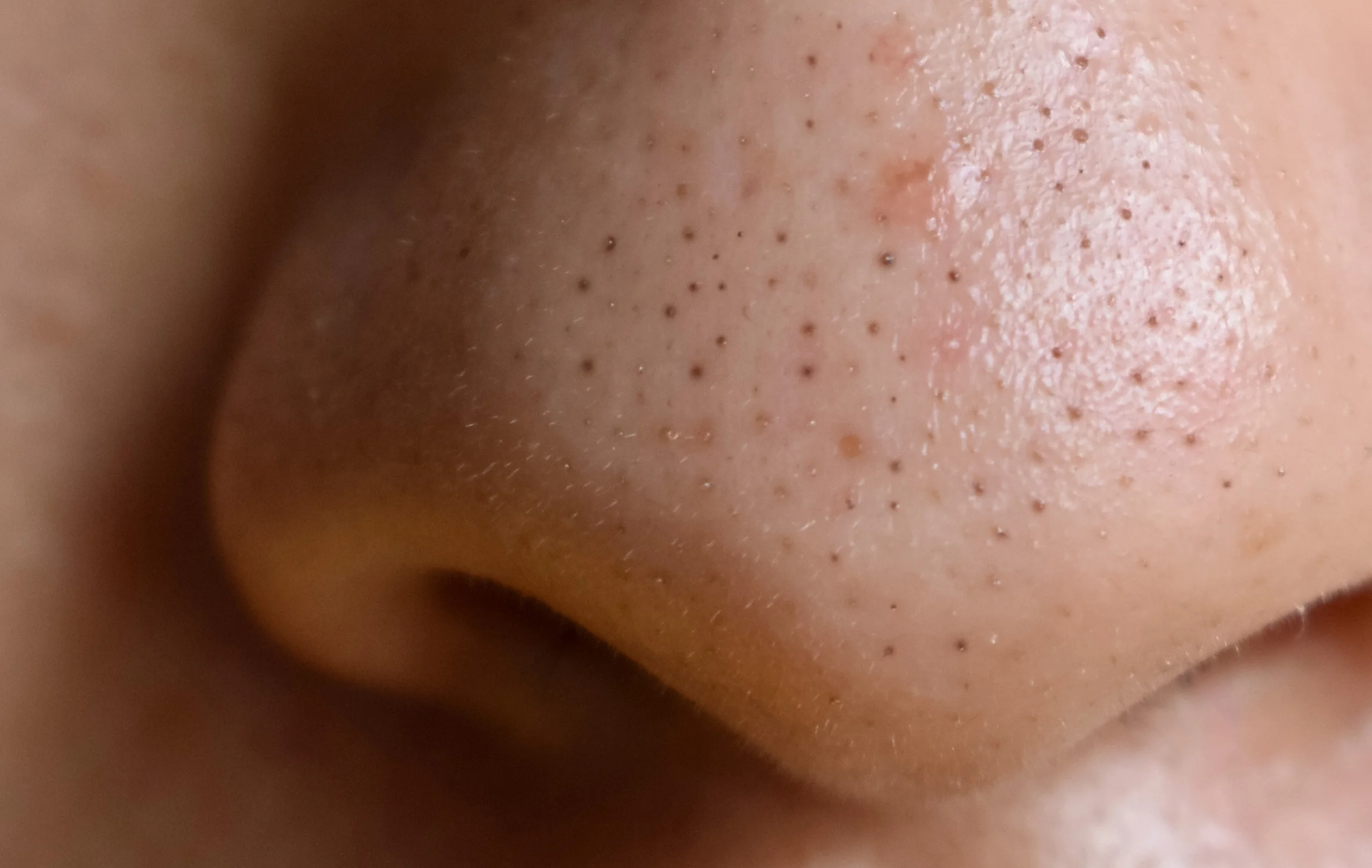
The nose sits at the highest, most sun-exposed point of the face. That makes it one of the most common spots for dark spots, patchy discolouration, or general unevenness to show up first.
The fix depends entirely on which type of pigmentation you’re actually dealing with; sun damage, melasma, and post-acne marks all respond differently to treatment.
This guide breaks down what nose pigmentation actually is, the six most common causes, how to tell the types apart, and when home care stops being enough.
Here’s what’s happening under the skin first.
Pigmentation on the nose happens when melanin-producing cells in that area go into overdrive. The result is patches, spots, or general darkening that stands out against the surrounding skin.
It can affect any skin tone and any age group, though, as you’ll see below, certain causes are far more common in specific groups than others.
Now, onto what’s actually driving it.
Identifying the specific cause matters more than picking a treatment off the internet, because the wrong fix for the wrong cause can make things worse.
The bridge and tip of the nose take the most direct UV hit on the face, day after day. That speeds up melanin production and leads to sun spots over time.
Blackheads and pimples are extremely common on and around the nose. The dark marks left behind after they heal are one of the most frequent reasons people notice nasal pigmentation.
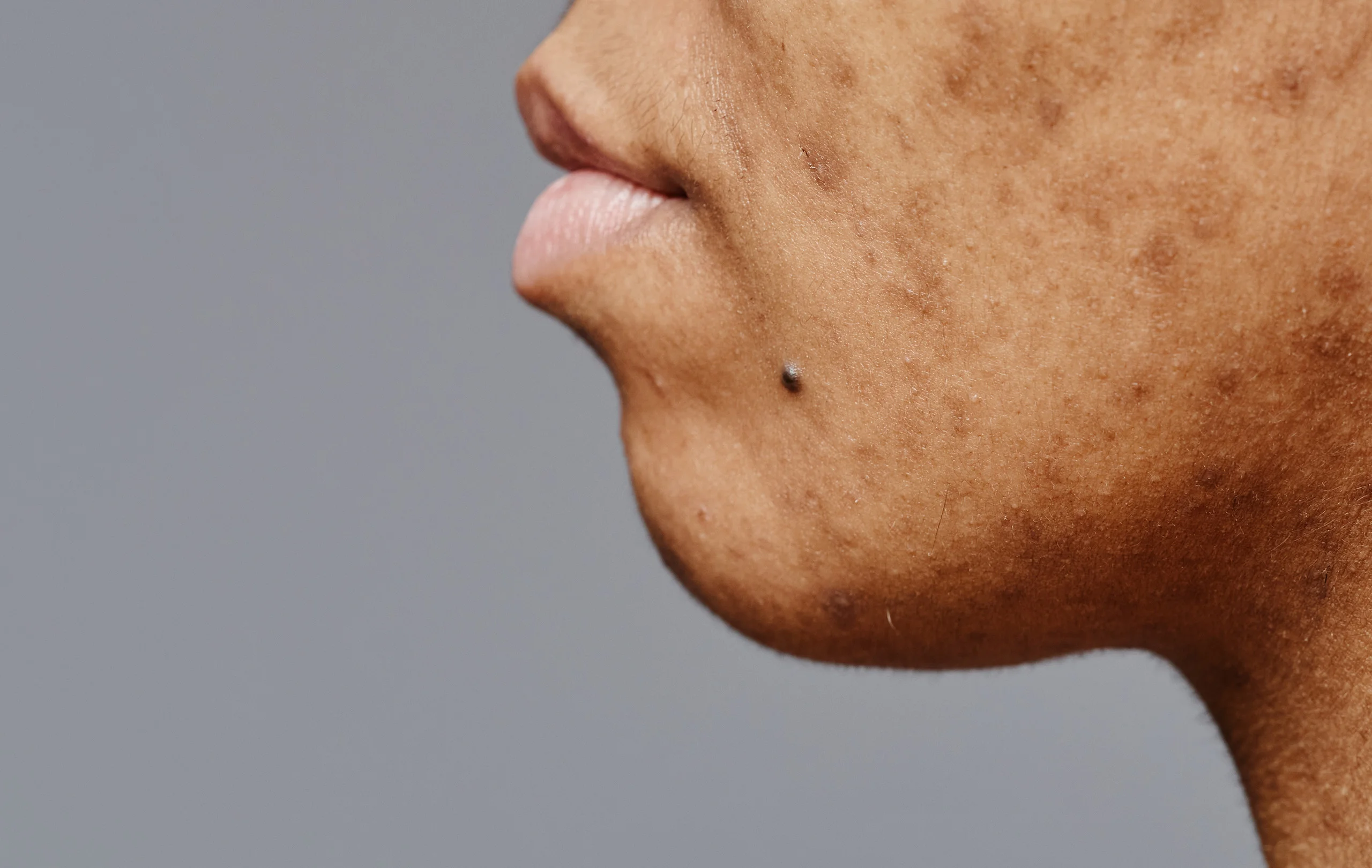
Hormonal fluctuations from pregnancy, birth control, or thyroid conditions can trigger symmetrical brown-grey patches, often across the nose and cheeks.
Some people are simply predisposed to freckle more heavily on the nose, especially with sun exposure.
Certain antibiotics, acne medications, and hormonal treatments make skin more reactive to sunlight, worsening existing pigmentation.
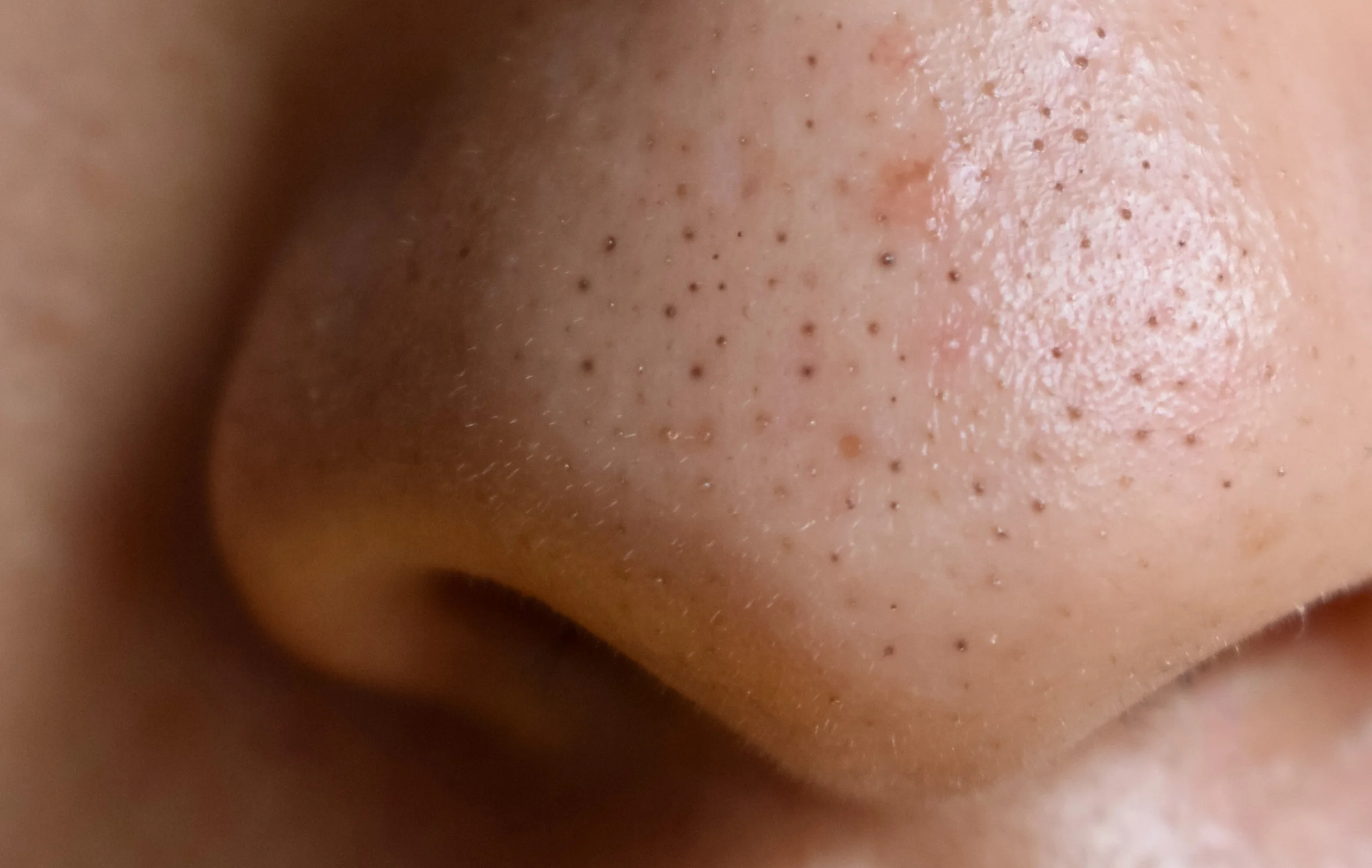
Not all “pigmentation” on the nose is pigmentation. Oxidised sebum in enlarged pores can look like dark spots and needs a completely different approach.
Worth knowing too: most nose pigmentation sits in the epidermis, the skin’s outer layer, which is why it usually responds to topicals and peels. A much rarer form sits deeper, in the dermis, and shows up as a grey-blue rather than brown discolouration. That type needs a dermatologist’s evaluation before any treatment, not a skincare routine.
But knowing the cause is only half the picture; you also need to know which type you’re looking at.
Not all nose pigmentation looks or behaves the same way. Knowing which type you’re dealing with matters, because each responds differently to treatment.
| Type | Appearance | Main Trigger | Typical Approach |
|---|---|---|---|
| Sun Spots / Freckles | Small, uniform, tan-brown dots | UV exposure over time | Sunscreen + topical brightening |
| Melasma Patches | Larger, gray, symmetrical blotchy patches | Hormonal changes | Topicals + peels/laser, hormone-aware plan |
| PIH (Post-Acne Marks) | Flat marks where blemishes healed | Acne, cuts, irritation | Time + sun protection, peels if persistent |
Once you know the type, here’s what actually treats it
A proper diagnosis matters more than picking a treatment off the internet; the right option depends on which type of pigmentation you have and how deep it sits in the skin.
A randomized trial on melasma relapse found sunscreens with visible-light protection kept MASI severity scores nearly flat over six months (median increase 0.45), compared with a much larger increase (2.43) for UV-only sunscreen a real-world case for choosing the right formula, not just any SPF.
Prevention matters just as much as treatment; here’s what’s actually in your control.
You can’t control genetics, but most other triggers are within your control with a few consistent habits:
Even with all of that, some cases need more than prevention. Here’s when to stop self-treating.
Get it checked if the pigmentation changes in colour, size, or shape; doesn’t improve despite consistent sun protection and skincare; or comes with redness, itching, or irritation. Self-treating for months with random creams often delays the one thing that actually moves the needle: an accurate diagnosis of which type you’re dealing with.
At a Kosmoderma consultation, a dermatologist examines the affected area, reviews your skincare and sun exposure history, and identifies whether you’re dealing with sun damage, melasma, post-acne marks, or congested pores, since each needs a different treatment approach. From there, you’ll get a plan matched to your skin type and the depth of the pigmentation, rather than a generic recommendation.
Consultations are available across Kosmoderma clinics in Bengaluru, Mumbai, Chennai, and Delhi, with follow-up reviews built into your treatment plan to track progress and adjust it if needed. Book a consultation at your nearest Kosmoderma clinic.
Kosmoderma dermatologists start with an accurate diagnosis before recommending anything because the wrong treatment for the wrong type of pigmentation can make things worse, not better.
Pigmentation on the nose is common and treatable, but the right approach depends entirely on what’s actually causing it. Book a consultation at Kosmoderma to get a proper diagnosis and a treatment plan built around your skin, not a generic routine.
Book a consultation at your nearest Kosmoderma clinic to confirm the exact cause first, treat second.
Yes, it’s one of the most frequently seen concerns in dermatology clinics, largely because the nose gets more sun exposure than almost any other part of the face.
Very mild, recent post-acne marks sometimes fade gradually with strict sun protection. Sun-induced spots and melasma typically need active treatment.
Over-the-counter bleaching creams can irritate the thin skin on the nose and sometimes worsen pigmentation. A dermatologist-prescribed formulation is safer and more effective.
It depends on the cause and depth, but most people need several weeks to a few months of consistent treatment to see meaningful change.
Yes, use a lightweight, non-comedogenic, oil-free sunscreen. Skipping it because of oily skin usually makes pigmentation worse over time.
Not usually, though heavy, occlusive makeup left on for long periods can contribute to congestion. Always cleanse thoroughly at the end of the day.
Dark underarms are common, rarely serious, and often manageable with patience and consistent care. If natural remedies aren’t moving the needle after a few weeks, that’s your cue to get a proper diagnosis rather than keep experimenting. Kosmoderma’s dermatologists can identify the exact cause and recommend a treatment plan built around your skin — book a consultation at your nearest Kosmoderma clinic to get started.

Not necessarily. Some clinics offer packages that are all-inclusive, while others will charge for implants, garments, or consumables separately. It is always best to ask for a breakdown of the costs before you book.
At least two – the first consultation will give you an idea of the options for treatment, and the second consultation will confirm the costs and procedures for recovery and aftercare support.
Not necessarily. A cheaper clinic may be passing on limited technology, unseasoned staff, or not mentioning their exclusions in the initial quote. It is important to always check the surgeon’s expertise, the clinic’s safety protocols, and the results of previous before and afters when making your decision.
Kosmoderma is proudly powered by WordPress




India’s 1st NABH Accredited Aesthetic Brand
Terms of Use & Privacy Policy | Disclaimer
@2025 Kosmoderma