Book Your Appointment
It’s not so hard to keep abreast with what’s happening in the world of SELF-CARE. All you need to do is drop email and we will keep dropping the knowledge bomb!
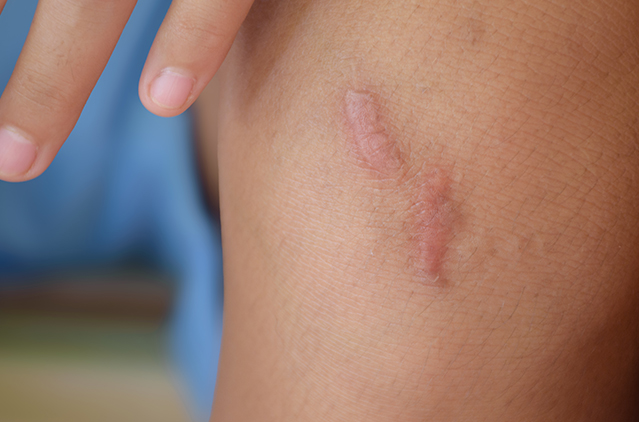
Keloid laser treatment has emerged as a leading solution for managing raised, stubborn scars that extend beyond the original skin injury. At Kosmoderma, we specialize in safe and effective keloid scar laser removal therapies designed to reduce their appearance and prevent further growth. In this blog, Kosmoderma Skin, Hair, and Body Clinics explores why keloids form, how to prevent them, and the most effective treatments to flatten and manage them. We also address a common concern: Do keloids return even after treatment?
A keloid is an overgrown, raised scar that forms due to excess collagen production after a skin injury—even minor ones like acne, piercings, or cuts. Unlike regular scars that stay within the wound area, keloids grow beyond the original wound, forming hard, shiny, and sometimes painful lumps.
They’re more common in:
Keloid laser treatment is considered one of the effective methods for reducing the size, thickness, and redness of raised scars. The keloid laser treatment cost in India varies depending on the size and location of the scar, the number of sessions required, and the clinic’s expertise. On average, the cost may vary depending on the type of session and the individual’s requirements. Since keloids often need multiple treatments for noticeable improvement, the total expense depends on the treatment plan advised by the dermatologist. Compared to traditional surgery, keloid scar laser removal is less invasive, reduces recurrence rates, and offers quicker recovery.
Keloid prevention is crucial if you’ve had one before. Here’s what Kosmoderma dermatologists recommend:
Keloid removal isn’t one-size-fits-all. Depending on your scar’s size, depth, and history, your Kosmoderma dermatologist may recommend one or a combination of treatments.
A widely used method to shrink and flatten keloids.
Pros:
Cons:
At Kosmoderma, we use FDA-approved laser devices to break down excess scar tissue while stimulating healthy collagen.
Pros:
Cons:
This involves freezing the keloid from within.
Surgical removal must always be followed by post-removal steroid injections, pressure therapy, or laser sessions to reduce recurrence.
At Kosmoderma, we never recommend surgery without a complete post-op plan, as standalone excision has a high recurrence rate.
Yes, they can.
Keloids have a recurrence rate of up to 70–100% if treated without follow-up care. That’s why combination therapy is the gold standard.
At Kosmoderma, our keloid treatment plan includes:
Case Study: Ear Keloid
Case Study: Acne Scar Keloid (Jawline)
Unlikely. Keloids don’t “shrink with time.” In fact, they may grow larger, thicker, and darker if left untreated.
Early treatment = better outcome + lower cost.
They occur due to an overgrowth of scar tissue after skin injury or surgery.
By avoiding unnecessary skin trauma and treating wounds early with medical guidance.
Laser treatment is less invasive, has faster recovery, and often reduces recurrence compared to surgical removal.
Yes, Kosmoderma uses advanced lasers suitable for melanin-rich skin, reducing the risk of hyperpigmentation.
Most treatments involve minor discomfort, which is well-managed with topical anaesthesia.
It varies. Small keloids may need 3–5 sessions. Larger or recurring ones need more.
Usually not, as it’s considered cosmetic unless medically necessary (e.g., recurrent infections or pain).
Silicone gels and OTC scar creams may help reduce irritation, but complete removal needs clinical intervention.
Kosmoderma is proudly powered by WordPress


India’s 1st NABH Accredited Aesthetic Brand
Terms of Use & Privacy Policy | Disclaimer
@2025 Kosmoderma