Book Your Appointment
It’s not so hard to keep abreast with what’s happening in the world of SELF-CARE. All you need to do is drop email and we will keep dropping the knowledge bomb!
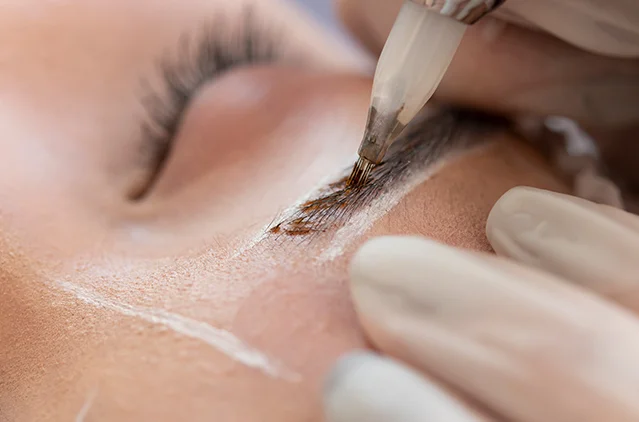
If you’ve been scrolling through beauty reels and salon pages, you’ve probably seen flawless, hair-like brows that make you wonder: Is microblading permanent? Short answer: No — microblading is semi-permanent, but with the right care and touch-ups, it can look fresh for a long time. In this post, we’ll explain what microblading actually does, how long results typically last, what affects longevity, and how to get the best, safest outcome — Kosmoderma style.
Microblading is a form of semi-permanent cosmetic tattooing where a trained expert uses a fine hand tool to implant pigment into the superficial layers of the skin, creating hair-like strokes that mimic natural eyebrow hairs. Because the pigment sits closer to the surface than traditional tattoos, it fades over time — which is precisely why microblading is considered semi-permanent rather than permanent.
First 6–8 weeks (healing and perfecting): Initially, the brows may look darker and bolder; scabbing and light flaking are normal. A standard touch-up about 6–8 weeks after the first session is usually recommended to perfect strokes and fill any spots that healed lighter.
Months 6–18: Pigment begins to fade noticeably for many people. Colours may soften, and strokes may blur a little as the skin cycles.
12–36 months: Many clients schedule a major refresh around 12–24 months to maintain shape and shade; without touch-ups, the effect will continue to fade and may practically disappear over 2–3 years for some people.
No. Microblading is not permanent. The pigment gradually breaks down, and the skin’s natural regeneration causes the strokes to soften and fade. For many people, the visible results last between 12 months and 30 months (roughly 1–3 years), after which the brows will need a refresh to maintain the original look. How long your particular microblading will last depends on a handful of important factors (below).
Several factors influence longevity:
Not really — because microblading intentionally deposits pigment superficially. If you want something that never fades, traditional tattooing (deeper pigment placement) is more “permanent,” but it looks different and carries different risks. Most people prefer semi-permanent microblading because it gives a natural result and the option to change shape or shade as trends and facial features evolve.
If you ever want the pigment removed, options include pigment-specific laser removal or saline treatments — both should be handled by professionals and sometimes require multiple sessions.
Book a 6–8-week follow-up for corrections. This is standard and helps the results last longer.
Avoid long sun exposure and use SPF on the brow area once healed. UV light fades pigment.
Skip active retinoids, chemical exfoliates, and professional skin lasers near the brow area while healing, and discuss with your technician if you use them regularly.
Avoid heavy sweating, swimming, and steam/sauna for the initial healing period.
Choose a qualified, experienced technician who uses medical-grade pigments and sterile technique — a great artist reduces the need for frequent corrections.
Microblading is generally safe when performed by trained professionals, but risks include infection, poor colour match, uneven strokes, and allergic reactions. Also, understand that colour and sharpness will change over time — occasional touch-ups are normal. Always look at a technician’s healed portfolios (not just immediate photos) and ask about pigments, sterilisation, and aftercare.
At Kosmoderma Skin, Hair, Body Care Clinics, we combine clinical safety with artistic detail. Our technicians work with dermatologists, use medical-grade pigments and strict hygiene protocols, and offer a structured follow-up plan, so your brows heal beautifully and last longer. If you’re weighing the question “is microblading permanent?”, a responsible clinic helps you set realistic expectations and a maintenance plan that suits your skin and lifestyle.
Pigments can shift subtly (warm or cool) as they fade; quality pigments and correct colour selection reduce unwanted shifts.
Most clients do a touch-up at 6–8 weeks, then a refresh every 12–24 months, depending on skin type and preference.
Yes, but oily skin may fade faster and sometimes benefits from a combo technique (microblading + shading) to improve longevity. Discuss options during consultation.
Not necessarily. Some clinics offer packages that are all-inclusive, while others will charge for implants, garments, or consumables separately. It is always best to ask for a breakdown of the costs before you book.
At least two – the first consultation will give you an idea of the options for treatment, and the second consultation will confirm the costs and procedures for recovery and aftercare support.
Not necessarily. A cheaper clinic may be passing on limited technology, unseasoned staff, or not mentioning their exclusions in the initial quote. It is important to always check the surgeon’s expertise, the clinic’s safety protocols, and the results of previous before and afters when making your decision.
Location


India’s 1st NABH Accredited Aesthetic Brand
Top Services
Skin Specialist
Our Clinics
Top Cosmetologists / Top Plastic Surgeon
@2026 Kosmoderma