Book Your Appointment
It’s not so hard to keep abreast with what’s happening in the world of SELF-CARE. All you need to do is drop email and we will keep dropping the knowledge bomb!
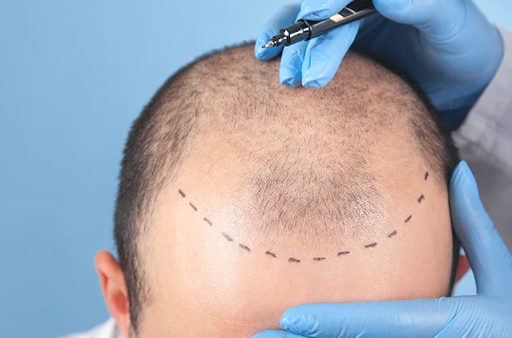
A hair transplant gives lasting, natural hair density and restores confidence with a short recovery and low maintenance. If you want fuller hair without daily concealment, a transplant is the most reliable option. Hair loss affects appearance and confidence. A hair transplant moves healthy hair to thinning areas. This post explains the benefits, what to expect, and why Kosmoderma clinics are a safe choice.
A hair transplant relocates your own hair to thinning areas for natural growth. Most modern transplants use Follicular Unit Extraction (FUE) or Follicular Unit Transplantation (FUT).
FUE removes individual follicular units from a donor area and implants them in the recipient area. Follicular unit extraction (FUE) — removing single hair groups for transplant; it reduces linear scarring.) Kosmoderma performs procedures under local anaesthesia with MD supervision.
Transplanted hair is your hair — it grows like normal and lasts long. Because surgeons move your own follicles, new hair follows natural growth cycles. You style it, cut it, and treat it like existing hair.
“Permanent” and long-term survival rates should be supported by clinical studies and long-term follow-up data.
Transplants add real hair where you need it, giving width and visual density. Surgeons place grafts to match your hairline, angle, and density. This creates a fuller, natural look — not a “plugged” appearance.
Achieving noticeable density can require careful planning. Many patients get one session; some need a second for added density.
Exact session counts vary by individual.
Once transplanted hair grows, care is simple — normal shampooing and haircuts only.
There’s no daily concealer, topical prosthetics, or frequent clinic visits. This reduces long-term cost and routine friction.
Time to full growth is commonly 9–12 months. (Source types: published follow-up studies, clinical guidelines.)
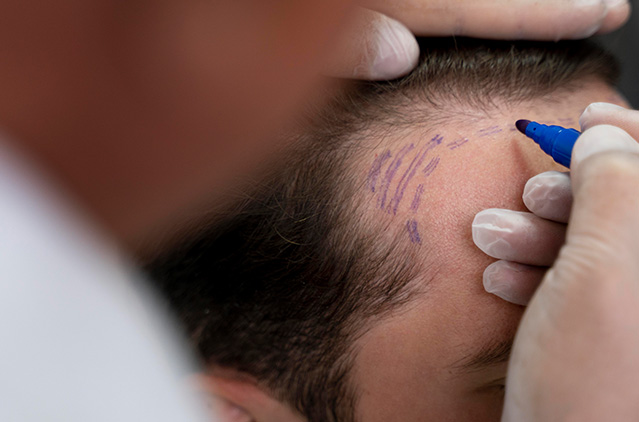
Surgeons design a hairline to suit your face, age, and goals.
A well-planned transplant blends with your existing hair. Kosmoderma MDs tailor hairlines to suit Indian facial features and skin types for a natural outcome.
MD supervision during planning and procedure improves aesthetics and safety. (Flag: include clinic SOP or MD credential as evidence.)
Compared with lifetime spending on temporary fixes, a transplant can be cost-effective.
You may invest upfront, but you avoid ongoing spending on concealment products or repeated non-surgical fixes.
Long-term cost calculations should be supported by client cost comparisons or a simple example. (Source types: clinic pricing analysis, patient case studies.)
Most patients need 1–2 sessions. Expect a short recovery and gradual hair growth over months.
Typical details we follow at Kosmoderma:
All procedures are done under local anaesthesia. MDs supervise the harvest and placement. Post-op care and follow-up are standard.
Good candidates have stable donor hair and realistic goals.
Ideal patients have healthy donor areas at the back of the scalp. A consultation at Kosmoderma will assess density, hair quality, and expectations.
Contraindications (e.g., active scalp infection, uncontrolled medical conditions) should be evaluated. (Source types: clinical guidelines, dermatologist SME.)
A hair transplant gives lasting, natural density with low ongoing care. If you want a fuller, real look and fewer daily hassles, a transplant is often the best route. Book a consultation with Kosmoderma MDs to get a personalised plan and a clear cost estimate.
Transplanted follicles tend to last long. Follow-up studies support long-term survival, but results vary. Flag: cite long-term studies and clinic audits.
Many patients need one session. Larger areas may need a second. Final plan after assessment.
Local anaesthesia makes the procedure comfortable. Mild soreness can occur for a few days.
Early regrowth starts ~3–4 months. Full result by 9–12 months in most cases. Flag: timelines vary; cite sources.
FUE leaves tiny dot scars. FUT leaves a linear scar. MDs at Kosmoderma discuss options and scarring.
Not necessarily. Some clinics offer packages that are all-inclusive, while others will charge for implants, garments, or consumables separately. It is always best to ask for a breakdown of the costs before you book.
At least two – the first consultation will give you an idea of the options for treatment, and the second consultation will confirm the costs and procedures for recovery and aftercare support.
Not necessarily. A cheaper clinic may be passing on limited technology, unseasoned staff, or not mentioning their exclusions in the initial quote. It is important to always check the surgeon’s expertise, the clinic’s safety protocols, and the results of previous before and afters when making your decision.
Location


India’s 1st NABH Accredited Aesthetic Brand
Top Services
Skin Specialist
Our Clinics
Top Cosmetologists / Top Plastic Surgeon
Terms of Use & Privacy Policy | Disclaimer
@2025 Kosmoderma