Book Your Appointment
It’s not so hard to keep abreast with what’s happening in the world of SELF-CARE. All you need to do is drop email and we will keep dropping the knowledge bomb!
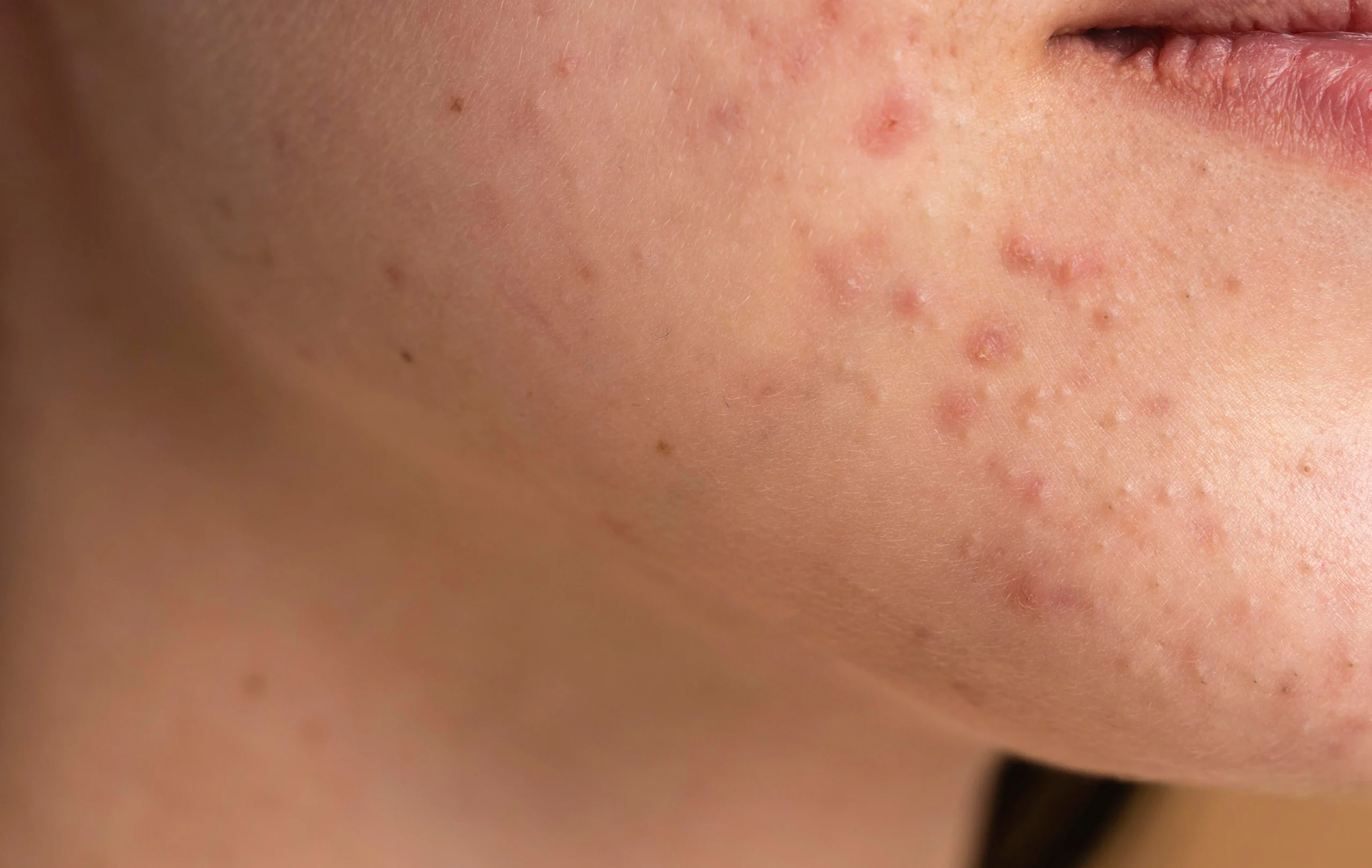
You look in the mirror and spot a bump that was not there yesterday. Is it a whitehead that will fade in two days? Or is it a deep, painful cyst that will stick around for weeks? Treating the wrong type of pimple with the wrong product is one of the most common reasons acne gets worse instead of better.
Pimples fall into several clear categories. Whiteheads and blackheads are clogged pores with little to no inflammation. Papules, pustules, nodules, and cysts involve more inflammation and bacteria. Understanding the different types of pimples on the face is the first step to identifying what you are dealing with and choosing the right treatment.
This guide breaks down every major type of facial acne. You will learn why each one forms and what dermatologists actually recommend to treat it.
There are six main types of pimples: whiteheads, blackheads, papules, pustules, nodules, and cysts. They range from mild and non-inflamed to severe and deeply inflamed. Knowing where your breakout falls on this scale tells you whether an over-the-counter cream will help, or whether you need a dermatologist.
| Type | Appearance | Inflamed? | Typical Treatment |
|---|---|---|---|
| Whitehead | Small white bump, closed pore | No | Salicylic acid, retinoids |
| Blackhead | Dark, open, clogged pores | No | Salicylic acid, extraction |
| Papule | Small, red, tender bump | Mild | Benzoyl peroxide, topical retinoids |
| Pustule | Red bump with white/yellow pus | Yes | Benzoyl peroxide, topical antibiotics |
| Nodule | Large, hard bump under the skin | Yes, deep | Oral medication, dermatologist care |
| Cyst | Large, soft, painful, pus-filled | Yes, severe | Prescription treatment, in-clinic procedures |
A whitehead forms when a hair follicle gets clogged. Dead skin cells and oil build up under a closed layer of skin. Because the pore stays shut, the trapped material never meets air. That is why it looks white or skin-colored instead of dark.
Whiteheads show up most often on the forehead, nose, and chin. This area is called the T-zone, and its oil glands work overtime. Whiteheads rarely hurt, and they often clear on their own within a few days
How to treat it: Use a salicylic acid cleanser to break down the build-up inside the pore. Adapalene, an over-the-counter retinoid, speeds up skin cell turnover so pores stay clear. Do not squeeze a whitehead. Squeezing pushes bacteria deeper and can leave a scar.
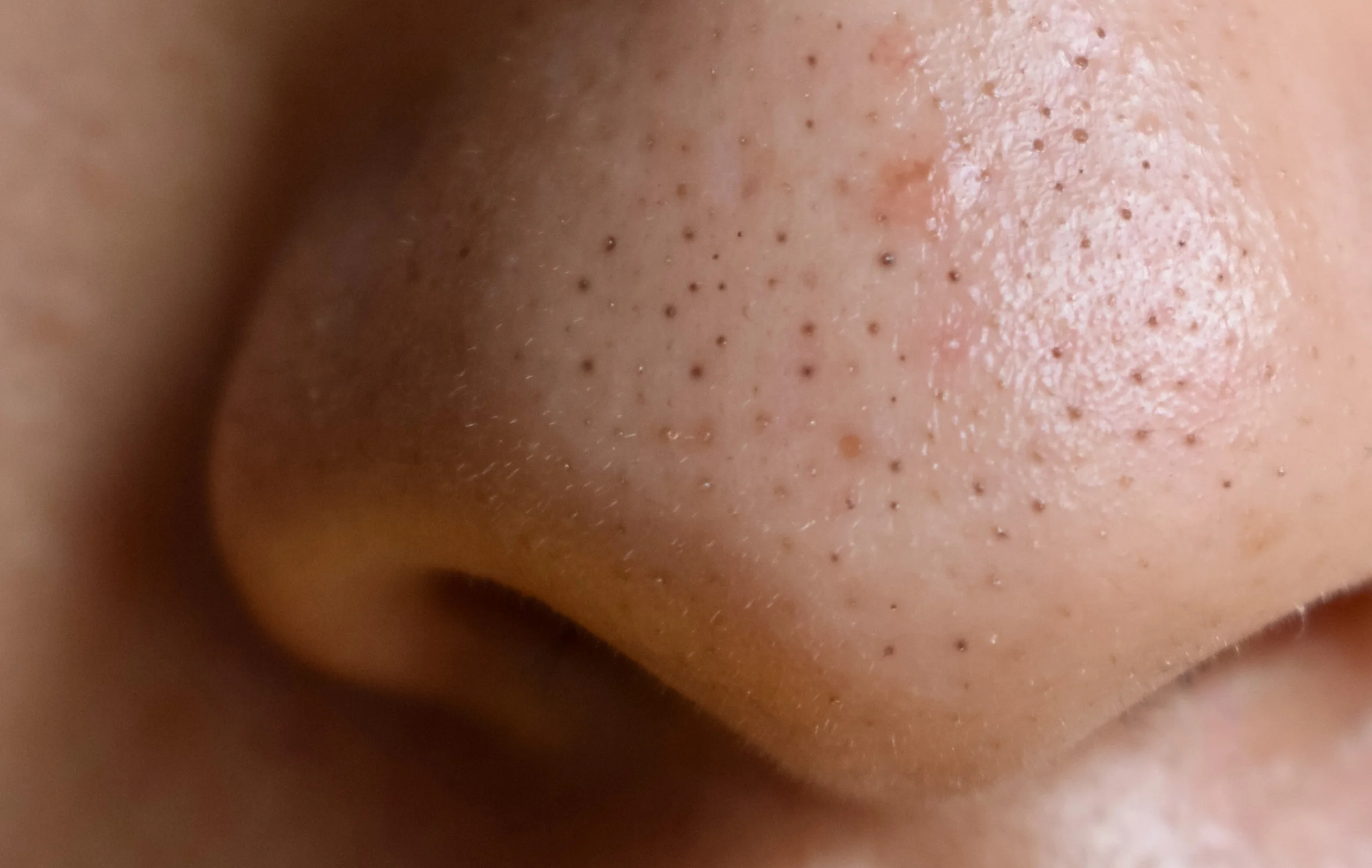
Blackheads form in the same way as whiteheads. The difference is that the pore stays open. Once the trapped oil and dead skin meet air, they oxidize. That chemical reaction turns the surface dark.
That dark colour is not trapped dirt. It is oxidation. So scrubbing harder will not make a blackhead disappear any faster.
How to treat it: Use salicylic acid or niacinamide products regularly to keep pores clear over time. Clay masks can soak up extra oil and shrink their look for a while. For stubborn blackheads, a professional extraction facial or a chemical peel works better than pore strips at home.
A papule is a small, firm, red or pink bump. It forms when the wall of a clogged pore breaks down and triggers inflammation. Unlike whiteheads and blackheads, a papule feels tender. It has no visible head of pus.
A papule is a sign that bacteria, mainly Cutibacterium acnes, are starting to multiply inside the clogged pore. Left alone, a papule can turn into a pustule within a day or two.
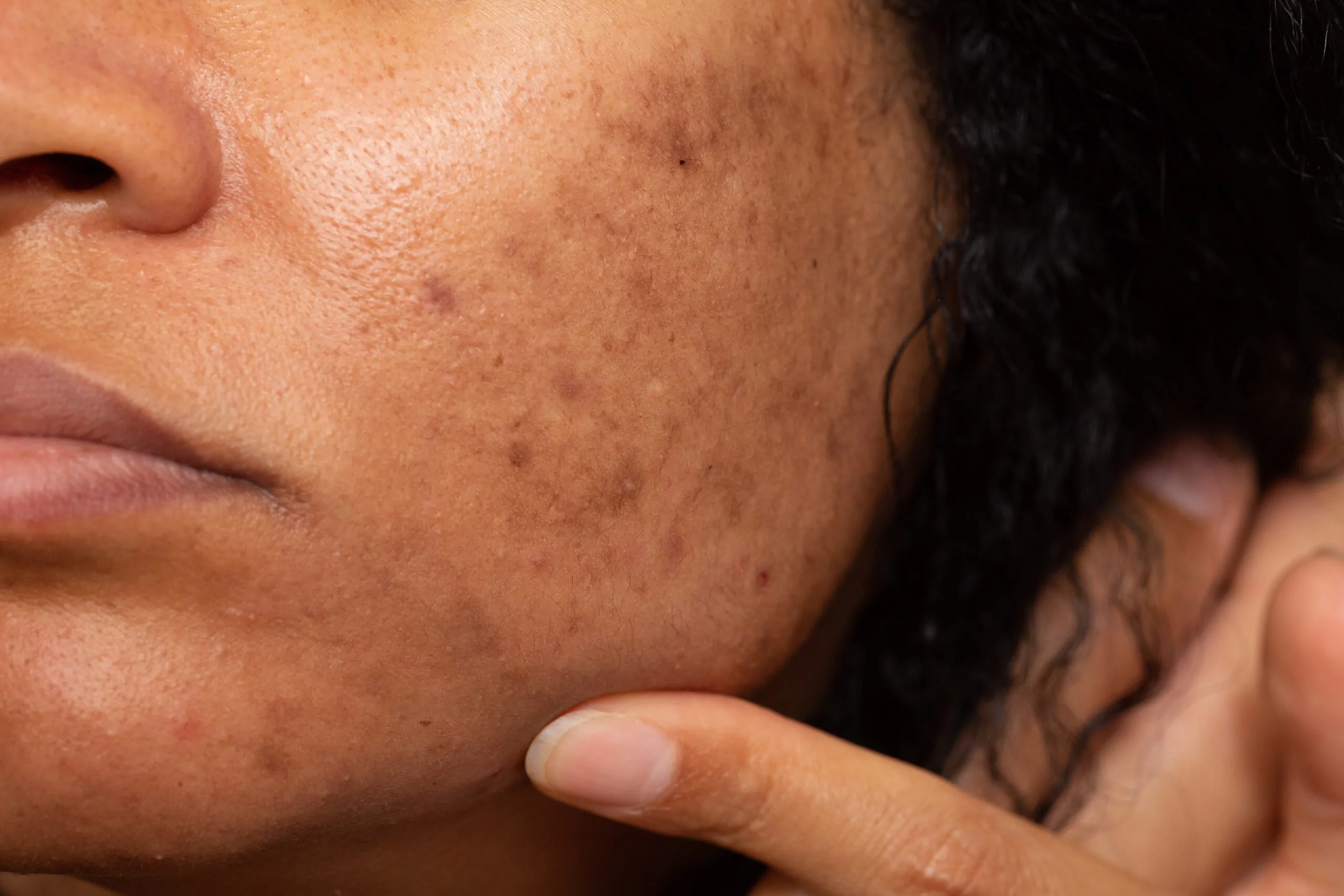
How to treat it: Benzoyl peroxide works well here. It fights acne-causing bacteria and calms inflammation at the same time. Spot treatments with sulfur or a topical retinoid can also help. Avoid picking at a papule. It is the type most likely to leave a dark mark if you disturb it.
A pustule is what most people picture when they hear the word “pimple.” It has a red base with a visible white or yellow center. That center is pus, a mix of dead white blood cells, bacteria, and oil. It shows your immune system is actively fighting the clog.
Pustules often show up in clusters during hormonal shifts. That is why they are common along the jawline and chin right before a period.
How to treat it: Dermatologists often pair benzoyl peroxide with a topical antibiotic like clindamycin. This combination cuts bacteria and reduces inflammation. A warm compress can help a pustule come to a head and drain on its own. If it will not heal, a dermatologist can perform a sterile extraction. This lowers the risk of scarring compared to squeezing it yourself.
A nodule forms when inflammation sits deep in the skin, not near the surface. It feels like a hard, painful lump under the skin. It usually has no visible head, since the infection sits below the top layer of skin.
A nodule can last for weeks, sometimes months, without proper treatment. It also carries a higher risk of scarring, since the inflammation reaches deeper layers of skin.
How to treat it: Nodular acne rarely responds to over-the-counter products. Dermatologists often prescribe oral antibiotics, hormonal therapy, or isotretinoin for moderate to severe cases. In the clinic, a steroid injection directly into the nodule can shrink it within a day or two.
A cyst is the deepest and most painful type of pimple. It is a large, soft lump filled with fluid that sits beneath the skin. It can feel like a boil, and the skin around it often turns red and swollen.
Cysts carry the highest risk of permanent scarring of all pimple types. The inflammation spreads past the pore into the surrounding tissue. Genetics, hormone imbalances, and high androgen levels are common triggers.
How to treat it: Cystic acne almost always needs medical care. Options include oral isotretinoin, hormonal treatment such as spironolactone for women, and in-clinic procedures like cyst drainage or a steroid injection. Home spot treatments do not work on cysts. Waiting weeks before seeing a dermatologist only raises the chance of a scar.
A salicylic acid wash made for blackheads will not treat a cyst. It may even irritate the skin around it. Inflammatory acne, like papules, pustules, nodules, and cysts, needs ingredients that fight bacteria and calm inflammation. Non-inflammatory acne, like whiteheads and blackheads, responds better to gentle exfoliation.
Getting this right saves time and protects your skin. It also stops the trial-and-error cycle that often leads to worse breakouts and dark spots.
Book a dermatologist visit if your breakouts are painful, keep coming back in the same spot, or leave dark marks and scars behind. Nodules and cysts should never be managed with home remedies alone. Waiting too long raises the risk of permanent scarring.
At Kosmoderma, dermatologists check the type, severity, and root cause of your acne first. From there, they build a plan that may include medical-grade peels, laser therapy, or a prescription-based routine suited to your skin.
Not every pimple needs the same fix. Whiteheads and blackheads often clear up with steady skincare. Papules and pustules may need targeted ingredients like benzoyl peroxide. Nodules and cysts usually call for professional care to avoid lasting scars.
Knowing the types of pimples on the face and which type of acne you are dealing with makes all the difference. It is the gap between a routine that works and one that quietly makes things worse. When in doubt, see a dermatologist. They can pinpoint the exact type and cause, then build a plan around it.
Not necessarily. Some clinics offer packages that are all-inclusive, while others will charge for implants, garments, or consumables separately. It is always best to ask for a breakdown of the costs before you book.
At least two – the first consultation will give you an idea of the options for treatment, and the second consultation will confirm the costs and procedures for recovery and aftercare support.
Not necessarily. A cheaper clinic may be passing on limited technology, unseasoned staff, or not mentioning their exclusions in the initial quote. It is important to always check the surgeon’s expertise, the clinic’s safety protocols, and the results of previous before and afters when making your decision.
Location


India’s 1st NABH Accredited Aesthetic Brand
Top Services
Skin Specialist
Our Clinics
Top Cosmetologists / Top Plastic Surgeon
Terms of Use & Privacy Policy | Disclaimer
@2025 Kosmoderma